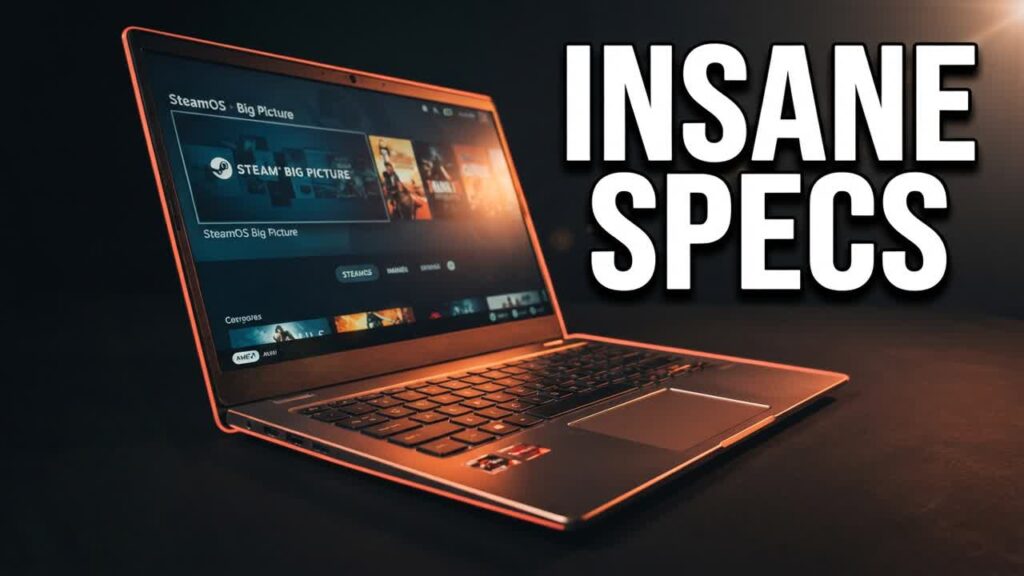
If you are looking for a dirt-cheap alternative to PC gaming handhelds or pricey rigs, converting an ultra-budget laptop into a dedicated Steam machine is an enticing project. The ASUS Vivobook Go 14″ frequently drops under $250, packing modern AMD architecture at bargain-bin pricing. Flashing official SteamOS onto this hardware bypasses Windows bloat and transforms a standard budget notebook into a streamlined, controller-friendly gaming station.
Hardware constraints still apply, so setting expectations is critical. The laptop is powered by an AMD Ryzen 3 7320U paired with Radeon 610M integrated graphics. While built on modern Zen 2 and RDNA 2 architectures, the 610M iGPU features only two compute units—a quarter of what powers the actual Steam Deck. The result is a machine that comfortably handles 2D indies, retro emulation, and cloud gaming, but struggles to push playable frame rates in demanding modern 3D titles without heavy resolution compromises.
- The Test Hardware: The ASUS Vivobook Go 14″ features a 4-core, 8-thread AMD Ryzen 3 7320U with an entry-level Radeon 610M iGPU.
- Software Experience: SteamOS installs cleanly on the AMD hardware, providing the full Steam Deck interface, controller support, and fast resume functionality.
- Performance Reality: Pixel art indies, older titles, and retro emulation run smoothly, but heavy AAA games push the 2-CU integrated graphics past their limit.
- Value Proposition: Stripping away Windows overhead unlocks snappier performance for casual gaming on hardware that costs significantly less than a dedicated console.
Bottom line: If you snag this laptop on a steep discount and want a fun, ultra-budget living room or travel indie machine, SteamOS breathes fresh life into basic hardware—though anyone craving modern 3D gaming should save up for a refurbished Steam Deck instead.