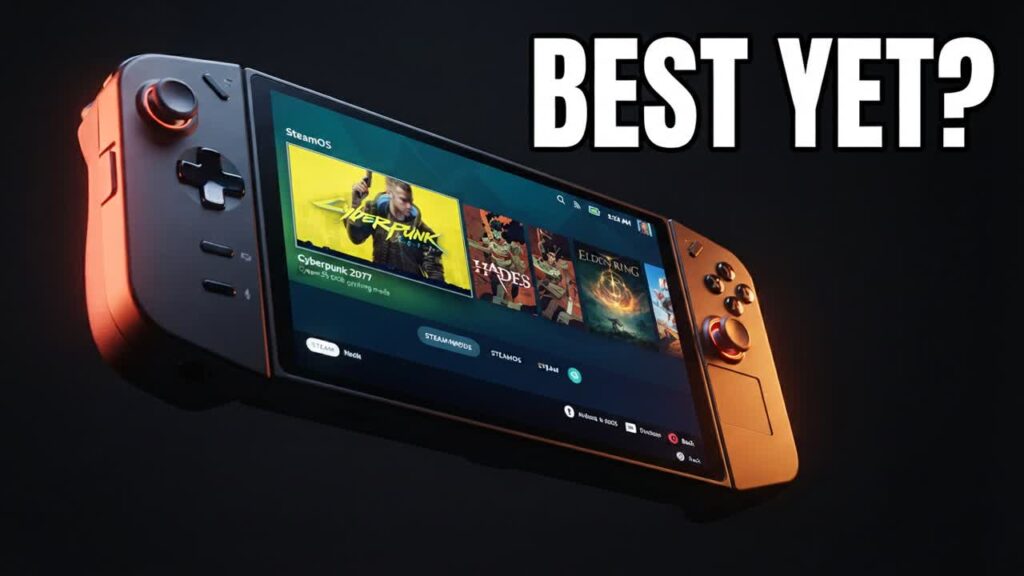
Windows handhelds like the Lenovo Legion Go have always offered impressive hardware—sharp displays, detachable controllers, and raw processing power—often held back by a sluggish, desktop-first operating system. Bringing official SteamOS to the Legion Go fundamentally reshapes the value equation for handheld shoppers, effectively combining the raw horsepower of high-end PC gaming with the seamless, console-like interface that made the Steam Deck a hit.
For budget-conscious buyers watching open-box and refurbished markets, this operating system shift dramatically boosts the Legion Go’s long-term utility. Instead of wrestling with clunky touch inputs, unpredictable sleep modes, and Windows background bloat, the device now delivers a streamlined launcher, efficient power scaling, and unified controller mapping right out of the box.
- Streamlined console interface: Eliminates Windows overhead in favor of SteamOS’s quick-access menus, shader pre-caching, and reliable sleep/wake functionality.
- Performance gains over Steam Deck: Takes full advantage of the Z1 Extreme chip, pushing higher frame rates and resolutions in demanding titles where Valve’s custom APU begins to struggle.
- Optimized battery draw: SteamOS handles per-game TDP limits and power management far more efficiently, stretching playtime without sacrificing stability.
- Smooth hardware integration: The device’s large, fast display and native controls map directly into the operating system without complicated third-party workarounds.
Bottom line: If you want the intuitive gaming experience of the Steam Deck but demand the larger screen and superior graphics performance of modern flagship handhelds, picking up a discounted Legion Go to run SteamOS is one of the smartest value moves in portable PC gaming right now.