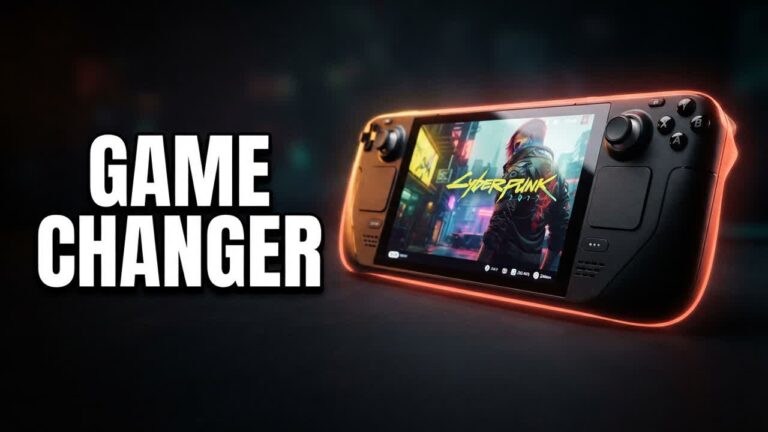
Handheld gamers finally have a direct challenger in the SteamOS arena with the arrival of the Lenovo Legion GO S powered by the AMD Z2 Go processor. Valve’s Steam Deck OLED has long been the gold standard for handheld value, but a legitimate rival running native SteamOS creates serious competition that could drive down prices and give budget-conscious shoppers real alternatives without the bloat of Windows.
The matchup between these two handhelds comes down to raw compute power versus tailored efficiency. While the custom APU inside the Steam Deck OLED is legendary for squeezing maximum battery life out of low-wattage indie gaming, newer silicon in the Legion GO S aims to deliver a noticeable performance bump when pushed to 15W in demanding modern AAA titles.
- Low TDP Efficiency: The Steam Deck OLED retains its crown at 5W to 10W power limits, making it the superior choice for maximizing runtimes in lighter indie, 2D, and retro games.
- 15W AAA Performance: The Legion GO S takes the lead in heavier AAA releases at 15W, delivering more stable framerates and higher graphical fidelity thanks to its newer architecture.
- Display Trade-Offs: The vibrant contrast, deep blacks, and power savings of the Steam Deck’s OLED panel remain difficult to beat dollar-for-dollar against standard handheld IPS panels.
- Battery Life: While the Legion GO S puts up a respectable fight under sustained loads, Valve’s fine-tuned power profiles still yield better overall battery longevity during casual play sessions.
Bottom line: If your priority is maximum battery life and power-efficient indie gaming, the Steam Deck OLED is still the handheld value king, but gamers who want extra graphical muscle for demanding modern games at 15W should seriously consider the Legion GO S.