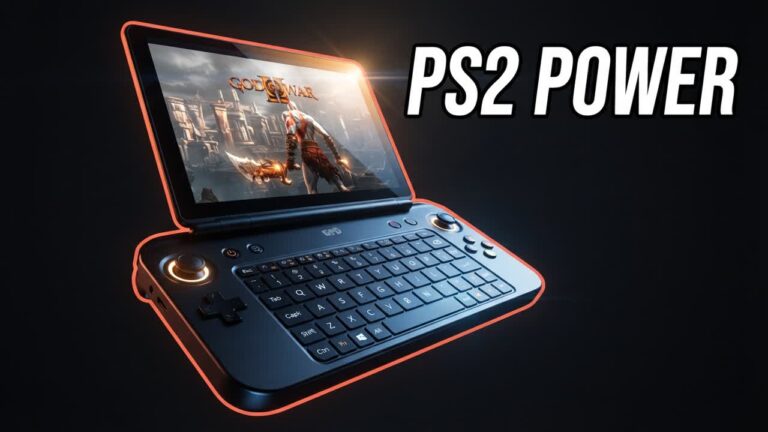
Handheld gaming PCs have evolved rapidly, but the prospect of AMD’s high-end “Strix Halo” APU crammed into a portable form factor like the GPD Win 5 completely redefines what mobile gaming can do. For shoppers debating between a bulky gaming laptop, a mini PC, or a handheld, this upcoming hardware promises enough graphical horsepower to handle modern AAA titles without the aggressive compromise on visual fidelity common to current-gen handhelds.
AMD’s Strix Halo architecture pairs Zen 5 CPU cores with a massive RDNA 3.5 GPU, targeting performance levels typically reserved for dedicated laptop graphics chips. Integrating that architecture into a Windows handheld signals a dramatic shift: rather than settling for low-to-medium settings at 720p or 900p, players can anticipate high-framerate 1080p gaming right out of the box.
- Desktop-grade integrated graphics: Strix Halo packs significantly more compute units than standard Strix Point or Z1 Extreme chips, putting it in a class well above current handhelds.
- True hybrid versatility: With this level of compute power and memory bandwidth, the GPD Win 5 easily doubles as a compact desktop workstation when docked to a monitor and peripherals.
- Power and thermal demands: Taming a high-wattage chip in a handheld chassis requires substantial cooling and battery capacity, meaning plugged-in performance will likely far outstrip portable runtimes.
- Market ripple effect: While top-tier silicon will command a premium launch price, its arrival will accelerate discounts and open-box deals on capable 7840U, 8840U, and Z1 Extreme devices.
Bottom line: The GPD Win 5 powered by Strix Halo is built for enthusiasts who want maximum portable horsepower without buying a separate gaming laptop, while budget-conscious shoppers should keep an eye out for the price drops it will trigger on current-generation handhelds.