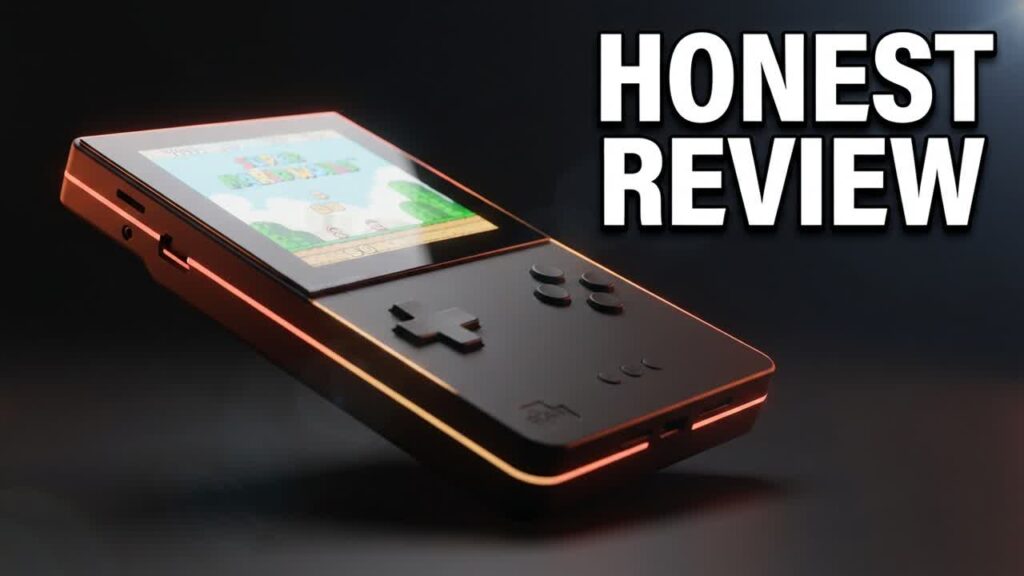
At roughly $220 before taxes and shipping—often driven higher by scalpers targeting limited-run colorways—the Analogue Pocket is a major investment rather than an impulse purchase. With budget handheld emulators now dominating the sub-$100 market, assessing the Pocket today clarifies whether this luxury FPGA device still delivers enough real-world value to justify its premium price tag.
The core appeal remains its hardware: an industry-leading 3.5-inch, 1600×1440 display that reproduces original Game Boy, Game Boy Color, and Game Boy Advance screens with microscopic accuracy. Over the last couple of years, the platform has matured significantly. The maturation of openFPGA means you are no longer limited to original physical cartridges, allowing you to load cores and digital ROMs directly from a microSD card across dozens of classic console and arcade systems.
- Unmatched Visual Fidelity: The 615 ppi display with hardware-level screen filters remains completely unrivaled by standard budget emulation handhelds.
- openFPGA Versatility: Community-developed cores turn the device into a capable multi-system machine that runs everything from the NES to the Sega Genesis with cycle-accurate precision.
- Lingering Hardware Quirks: The D-pad still suffers from occasional false diagonals, and ergonomics can feel cramped during extended sessions without third-party grips.
- Hidden Costs: Between expensive proprietary accessories, steep shipping rates, and regular stock shortages, total setup costs climb rapidly beyond the base MSRP.
Bottom line: If you prioritize cycle-accurate performance, physical cartridge playback, and a pristine retro display, the Analogue Pocket is worth the investment; however, gamers who just want a portable ROM player will get far better value out of affordable Linux or Android handhelds.