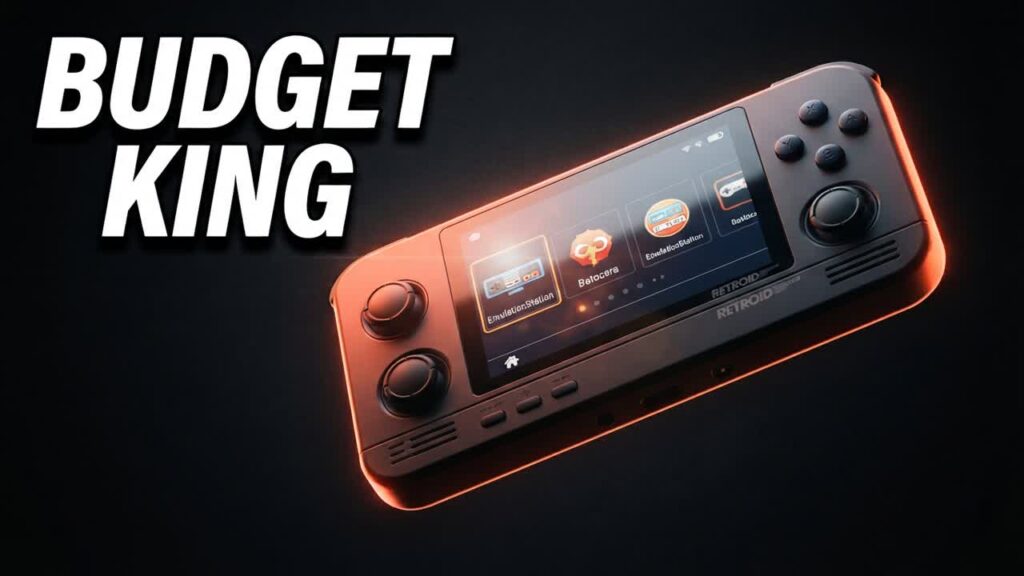
The Retroid Pocket Mini is already one of the most compelling compact handhelds on the market, but its reliance on Android can be a turn-off for gamers who prefer a frictionless, dedicated console interface. Early development builds of custom Linux distributions—specifically Batocera and ROCKNIX—are now running on the Pocket Mini, offering a promising glimpse at a streamlined, pick-up-and-play alternative that cuts out touchscreen menus and mobile OS bloat.
Because these Linux builds run directly off a microSD card, owners can effectively treat the device as a dual-boot machine without wiping or compromising the stock Android installation. While Qualcomm-based chipsets have traditionally made custom Linux development challenging, these test builds show that the hardware is fully capable of driving an EmulationStation-style interface tailored specifically for handheld gaming.
- Dual-boot convenience: Batocera and ROCKNIX boot straight from an external microSD card, allowing you to test Linux without overwriting the device’s factory Android storage.
- Distraction-free console UI: Replaces Android’s app-launcher ecosystem with unified frontends that support automatic box art scraping, global hotkeys, and preconfigured controller mappings.
- Solid retro emulation: Early builds already handle classic 8-bit and 16-bit eras, arcade titles, PlayStation 1, N64, and Dreamcast with minimal setup required.
- WIP high-end performance: More demanding systems like PS2 and GameCube currently perform better under Android’s mature standalone emulators, meaning Linux is best suited for retro-focused workflows during this early testing phase.
Bottom line: If you love the Retroid Pocket Mini’s pocketable OLED design but hate the setup friction of Android, the rapid development of Batocera and ROCKNIX makes this handheld an even better long-term value for retro enthusiasts.