
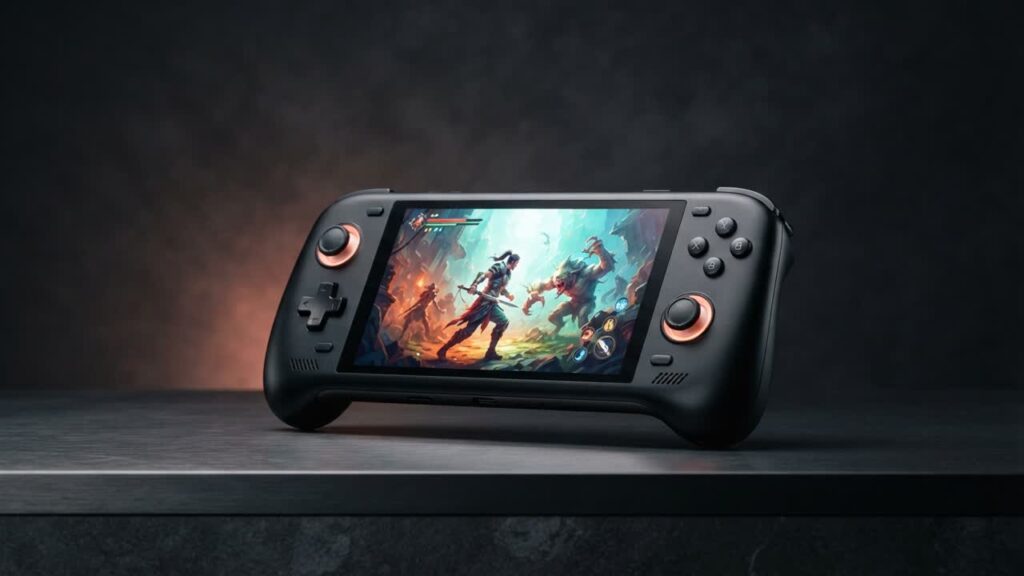
Android handheld gaming has reached a major hardware milestone. The Odin 2 long dominated the market as the gold standard for performance and value, but the new Odin 3 raises the bar significantly by introducing Qualcomm’s flagship Snapdragon 8 Elite chipset. For shoppers looking for maximum power in a dedicated portable form factor without stepping up to the bulk and battery drain of an x86 Windows device, this release demands attention.
The leap to the Snapdragon 8 Elite means desktop-class CPU architecture in an Android handheld, setting a new benchmark for raw processing speed. However, flagship hardware comes with practical buying considerations—specifically whether the performance bump actually translates to a better real-world experience over existing models that already handle the majority of retro emulation with ease.
- Unmatched Android performance: As the first handheld equipped with the Snapdragon 8 Elite, it delivers class-leading CPU and GPU performance, easily outperforming every other Android portable on the market.
- Expanded emulation headroom: The extra horsepower provides vital headroom for demanding emulation workloads, particularly upscaled Switch titles, high-end PS2/GameCube, and emerging PC-to-Android translation layers like Winlator.
- Active cooling stability: The active fan system keeps the flagship silicon running at peak clocks without the aggressive thermal throttling typical of high-end smartphones.
- Diminishing returns for current owners: Because most Android emulation software is limited by software optimization rather than pure raw compute, gamers who already own an Odin 2 will find fewer dramatic performance differences in everyday retro titles.
Bottom line: The Odin 3 is the ultimate pick for power users and enthusiasts who want the fastest Android device available for cutting-edge emulation, but budget-minded gamers and current Odin 2 owners can safely stick with previous-generation hardware without feeling left behind.