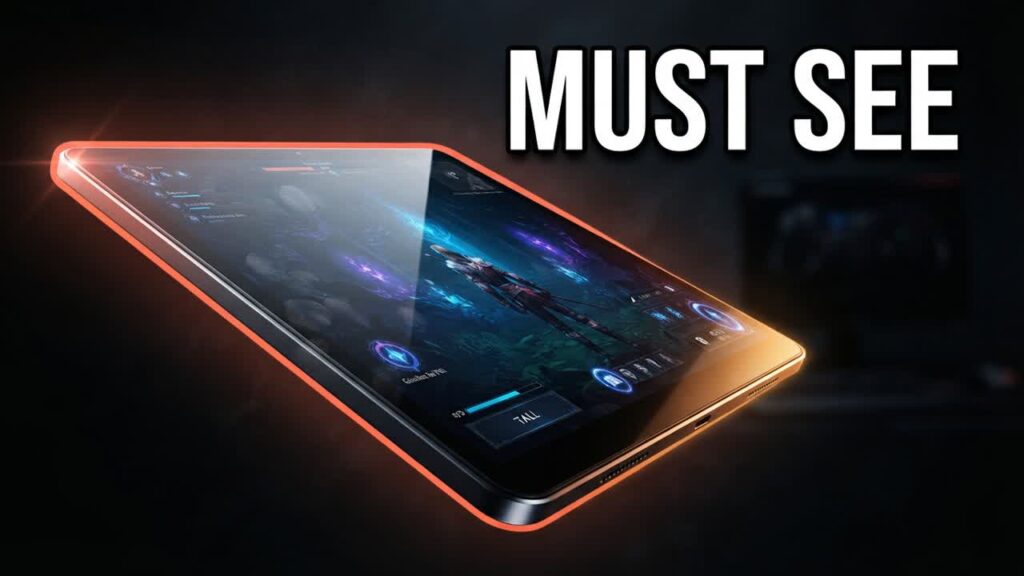
Dedicated Android handhelds dominate the budget emulation scene, but shoppers looking for maximum screen real estate and everyday utility might find a better deal hiding in plain sight: standard Android tablets. Thanks to rapid advances in mobile chipsets, high-refresh panels, and affordable telescopic controllers, converting a tablet into a modular handheld now rivals—and sometimes beats—purpose-built gaming devices.
The appeal comes down to versatility and visual impact. An 8-to-11-inch tablet delivers vastly superior immersion for retro emulation, cloud streaming, and native Android gaming compared to the standard 5-to-6-inch screens found on pocketable handhelds. However, going the tablet route requires trading away the seamless out-of-the-box convenience, active cooling, and ergonomic balance engineered into dedicated gaming hardware.
- Unmatched Display Value: Tablets routinely offer sharper resolutions, wider color gamuts, and 90Hz to 144Hz refresh rates at price points where handhelds still settle for basic 60Hz panels.
- Modular Controller Flexibility: Pairing a tablet with a clamp-style telescopic controller creates a Nintendo Switch-style layout with full-sized thumbsticks, though top-heavy balance and overall device weight can limit comfort during long sessions.
- True Multitasking Power: A dedicated gaming handheld sits idle when you finish playing, whereas a tablet doubles as a media streaming powerhouse, digital comic reader, and productivity tool that stretches your tech budget significantly further.
- Software and Thermal Trade-offs: Tablets generally lack built-in active cooling fans, custom front-end gaming launchers, and integrated gamepad mapping tools, meaning you will spend more time tweaking settings and managing heat throttling.
Bottom line: If you prioritize a massive, high-quality screen and want a machine that handles work and media alongside gaming, pairing a budget tablet with an expandable mobile controller delivers far more value than a single-purpose handheld.