Gamers have been clamoring for an official “Steam Deck Laptop” ever since Valve perfected its handheld interface, and for good reason: Windows bloat remains the biggest performance drain on portable gaming PCs. Installing official SteamOS onto a compact, all-AMD gaming machine bridges the gap, transforming a traditional notebook into a seamless, console-like powerhouse designed purely for playing games.
Testing this concept on an ASUS TUF Gaming A14 equipped with the AMD Ryzen AI Max+ 392 processor (12 cores, 24 threads) and Radeon 8060S graphics with 16GB of dedicated VRAM shows the untapped potential of this ecosystem. Because SteamOS is built around Linux and optimized for AMD architectures, combining an all-AMD mobile system with Valve’s operating system delivers incredible gaming efficiency without the background resource overhead typical of standard gaming laptops.
- AAA Performance Beyond Handheld Limits: Unlocks true high-frame-rate 1080p and 1440p gaming on demanding modern titles, easily outperforming current portable handhelds while keeping thermals and power in check.
- Native AMD Compatibility: The full AMD hardware stack ensures clean driver integration with the Linux kernel, avoiding the stuttering and display output issues often encountered when running SteamOS on mixed-vendor hardware.
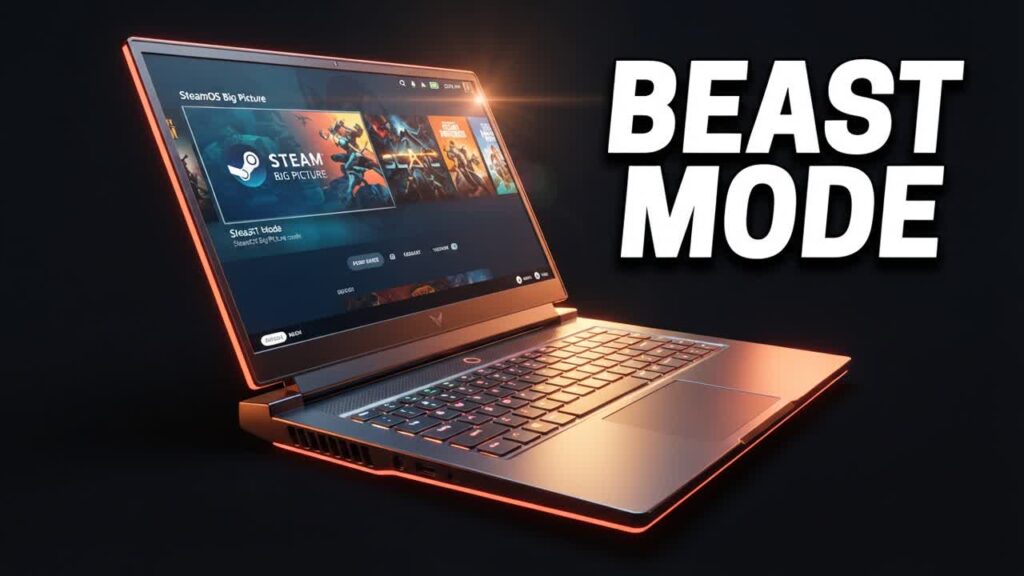
- Frictionless Console Experience: Boots straight into Steam’s Big Picture interface with functional sleep/wake capabilities, consolidated controller navigation, and zero Windows background update interruptions.
- Future-Proof 16GB VRAM Buffer: The generous memory allocation ensures smooth texture streaming in unoptimized modern releases that routinely bottleneck cheaper 8GB laptop GPUs.
Bottom line: If you love the frictionless UI and instant suspend features of the Steam Deck but crave desktop-grade frame rates and a larger high-refresh screen, building a SteamOS-powered all-AMD laptop is the ultimate portable gaming upgrade.