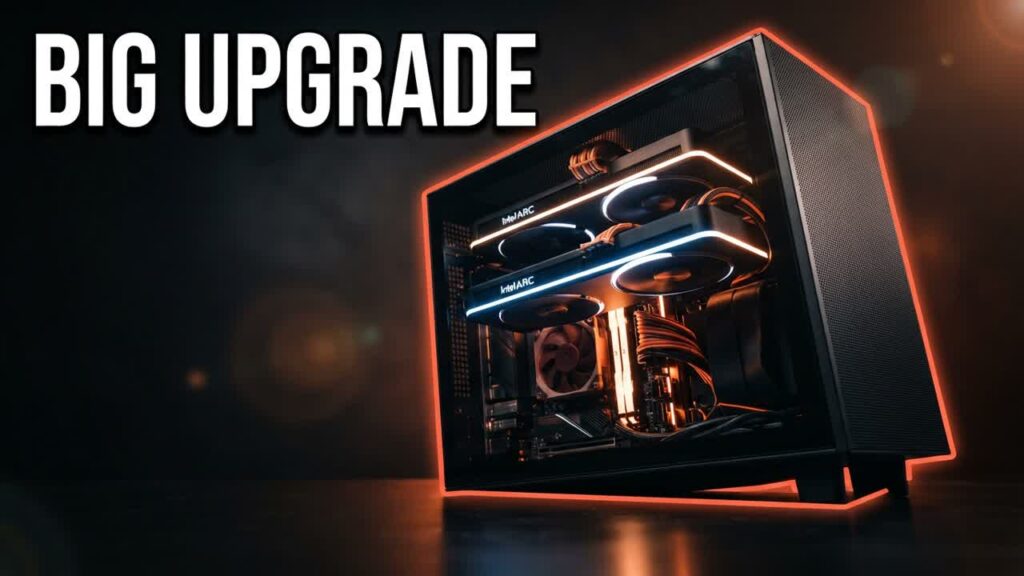
Small form factor (SFF) PCs are the ultimate space-saving solution for minimalist setups, but graphical horsepower in tiny builds usually tops out with a single modest low-profile card. Squeezing two discrete Intel Arc GPUs into an ultra-compact chassis flips conventional wisdom on its head. With Intel Arc cards consistently selling at entry-level price points, doubling up on budget hardware provides an intriguing path toward building a low-cost, high-density workstation without spending enterprise money.
While traditional multi-GPU gaming scaling is largely a thing of the past, modern workloads like video rendering, AV1 hardware encoding, and local AI model processing thrive on distributed GPU resources. Intel’s dedicated media engines deliver exceptional compute capabilities for their price tag, making a dual-Arc micro-rig an unexpectedly practical option for content creators, streamers, and homelab tinkerers who need multi-card versatility within a tiny desk footprint.
- Budget-Friendly Compute Density: Pairing two low-profile or single-slot Intel Arc GPUs inside an SFF case provides massive hardware-accelerated encoding and rendering power at a fraction of the cost of high-end professional cards.
- AV1 and Content Creation Dominance: Intel’s superior media encoders allow users to offload multiple render pipelines, export streams simultaneously, and tackle video editing workflows with remarkable efficiency.
- Gaming Realities: Because modern game engines no longer support traditional multi-GPU bridging, gaming workloads will only utilize a single card, meaning this configuration won’t double your frame rates in modern titles.
- Thermals and Power Management: Tight PCIe slot spacing and restricted airflow inside compact cases demand careful power supply planning and adequate chassis ventilation to avoid thermal throttling.
Bottom line: If you are a budget creator, streamer, or tech enthusiast looking to maximize AI and video rendering density in a micro chassis, running dual Intel Arc cards delivers incredible productivity value—just look elsewhere if pure gaming performance is your primary goal.